For most ecommerce teams, the real question is no longer "AI or traditional photography?" It is "Which parts of the workflow should stay photographic, and which parts can be accelerated with AI?"
That is a better framing because the two approaches are not direct substitutes in every situation. They solve different problems well.
Traditional photography still gives you the highest degree of physical realism and creative control on set. AI gives you speed, lower marginal cost, easier variation, and much stronger catalog consistency at scale.
The right choice depends on what kind of image you need.
If your real bottleneck is catalog cleanup rather than new creative production, read How to Improve Ecommerce Product Images Without Reshooting Everything. It complements this article well.
Where Traditional Photography Still Wins
Traditional photography is still strongest when the image needs to capture something physically precise or emotionally premium.
That usually includes:
- hero campaign visuals
- luxury products
- highly reflective surfaces
- complex textures and materials
- products that need very specific model posing or styling
- launch assets that will be reused across ads, press, and brand pages
Why it wins there:
- you control every lighting decision
- you capture the real object directly
- fine detail is less likely to drift
- the result feels more trustworthy when authenticity is central to the brand
If one image has to represent the brand at its absolute best, traditional photography is still hard to beat.
Where AI Product Photography Wins
AI is usually strongest where scale and repeatability matter more than on-set craft.
That often means:
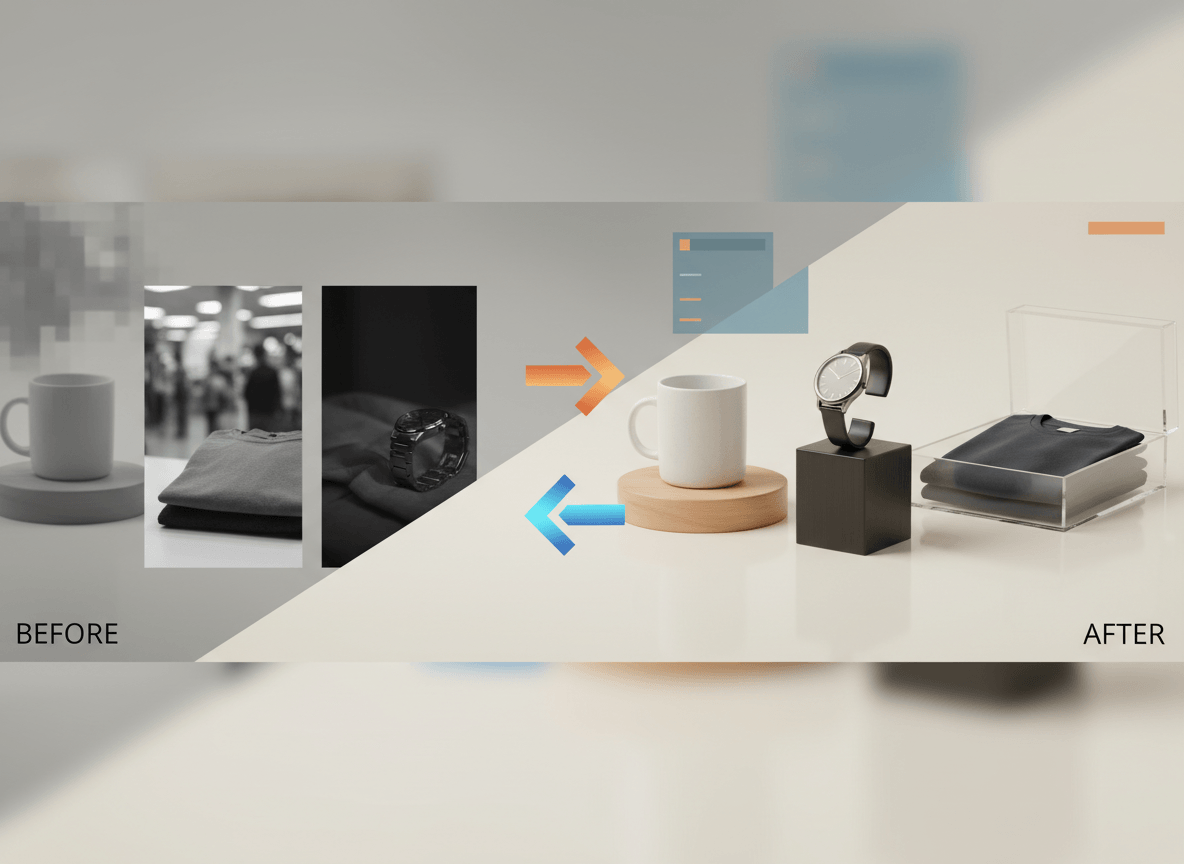
- cleaning up catalog images
- standardizing lighting across many SKUs
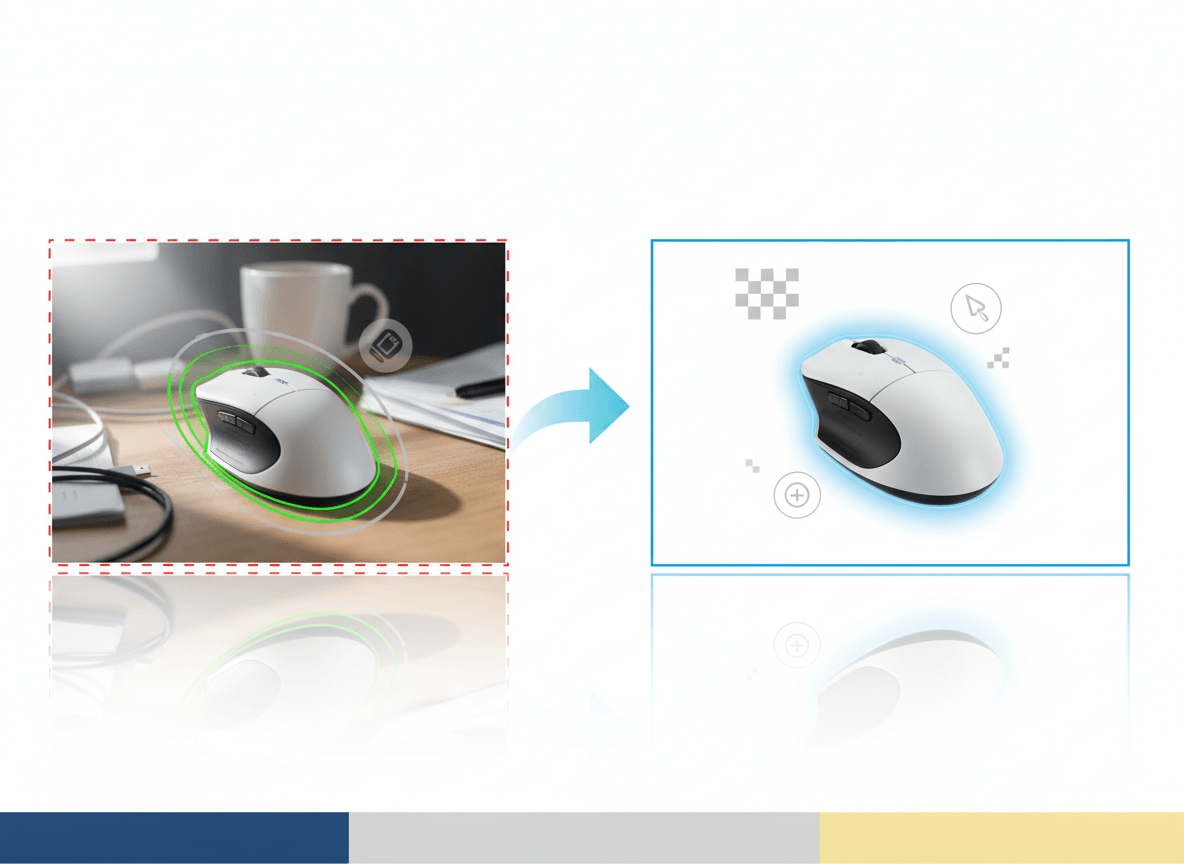
- generating white-background listing images
- creating fast background variations
- producing secondary creative for marketplaces and ecommerce PDPs
- updating large catalogs without organizing a new shoot
Why it wins there:
- the turnaround is much faster
- the per-image cost is usually much lower
- consistency is easier to maintain
- you can generate variations without rebuilding the whole shoot
For operational ecommerce imagery, those advantages add up quickly.
Cost: Fixed Production vs Flexible Output
Traditional photography has a heavier cost structure.
You are paying for some combination of:
- photographer time
- studio or location
- lighting and styling
- props or models
- retouching
- reshoots if the brief changes
That can be the right investment for hero assets. But it becomes expensive when you need routine catalog output or frequent updates.
AI workflows shift the economics:
- lower upfront production cost
- lower marginal cost for variations
- less coordination overhead
- faster iteration when a background, crop, or look needs to change
That is why AI usually makes the most financial sense for high-volume product imagery and traditional photography makes the most sense for high-stakes flagship creative.
Speed: The Biggest Operational Difference
Traditional shoots move on calendar time. You need planning, sample availability, scheduling, capture, selection, and post-production.
AI workflows move on processing time. Once you have a clean source image or a repeatable setup, you can create many usable outputs much faster.
That matters most when:
- a new seasonal collection needs to go live quickly
- a marketplace image is rejected and needs a fast replacement
- the catalog has grown faster than the team can reshoot it
- you need localized or campaign-specific variants from the same base image
If the business bottleneck is speed, AI is often the better operational tool.
Consistency: The Underrated AI Advantage
Consistency is where AI frequently beats traditional photography in day-to-day ecommerce work.
A catalog shot over multiple days, by different photographers, or from mixed supplier sources usually develops visible inconsistencies:
- different white balance
- slightly different camera heights
- inconsistent shadows
- changing crop styles
- different levels of contrast or retouching
That visual drift makes a store feel less professional.
AI-assisted workflows are useful because they help normalize those differences. When you apply the same visual rules across an entire set, the catalog starts to feel like one coherent brand system instead of a pile of disconnected photos.
Quality: Strong Enough for Many Jobs, Not Every Job
This is where teams need to be honest.
AI can produce excellent ecommerce imagery, especially when:
- the source image is strong
- the product shape is simple
- the desired output is a listing image, clean packshot, or controlled variation
- the team does real QA before publishing
But AI is not automatically superior just because it is fast. It can still introduce:
- inaccurate details
- over-cleaned textures
- unrealistic reflections
- color drift
- awkward human hands, models, or scale cues
So the practical rule is:
- trust AI for speed and scale
- trust traditional photography when precision and physical realism are non-negotiable
The Best Answer for Most Brands: Hybrid
For most ecommerce businesses, the best answer is not choosing one forever. It is using each method where it has the clearest advantage.
A strong hybrid model looks like this:
- Use traditional photography for hero assets, campaign launches, and products where realism is critical.
- Use AI to create listing-ready images, catalog variations, white-background versions, and speed-oriented secondary assets.
- Use one approved visual standard so the final outputs still look like the same brand.
This approach keeps quality high where it matters most and keeps production efficient everywhere else.
A Simple Decision Framework
Choose traditional photography first when:
- the product is expensive or visually complex
- the shoot is brand-defining
- the image needs to feel unmistakably premium
- human styling or exact art direction matters
Choose AI first when:
- you need to standardize a large catalog
- you need many variations from the same product
- the team needs speed more than on-set control
- the budget does not justify repeated shoots
- the image will mainly support ecommerce listings, grids, or supporting visuals
Choose hybrid when:
- you want a clean main image plus multiple supporting variants
- you already have decent source photos but need better output at scale
- the brand wants consistency without reshooting everything
Related Reads
- How to Improve Ecommerce Product Images Without Reshooting Everything
- How to Create White Background Product Images Without Photoshop
- AI Product Photography
Bottom Line
Traditional photography is still the premium tool for hero-level realism and controlled brand storytelling. AI product photography is the better operational tool for speed, scale, consistency, and catalog efficiency.
That is why the winning strategy for most ecommerce teams is not either-or. It is using real photography where authenticity matters most and using AI everywhere the workflow can be accelerated without compromising product truth.
If you want the AI side of that workflow to stay useful for ecommerce instead of drifting into generic image generation, Sellshot is built for catalog, listing, and marketplace use cases: Start free trial ->